Choosing the right performing arts school is an important decision that can have a lasting impact on your child’s confidence, creativity, and personal development. With so many options available in Singapore, finding the right fit may seem overwhelming, especially if it’s your child’s first experience with dance, singing, or acting classes.
A great performing arts school does more than teach technical skills. It provides a safe, supportive environment where children can build confidence, develop friendships, express themselves creatively, and enjoy learning at their own pace.
Whether your child is interested in dance, singing, acting, or musical theatre, this guide will help you understand what to look for when choosing a performing arts school and how to make the best decision for your family.
Why Choosing the Right Performing Arts School Matters
Every performing arts school has its own teaching philosophy, curriculum, and learning environment. Choosing the right school isn’t simply about finding the closest location or the lowest price. It’s about finding a place where your child feels encouraged, supported, and excited to learn.
A quality performing arts education helps children develop skills that extend beyond the stage. They learn discipline, teamwork, communication, creativity, resilience, and confidence—qualities that benefit them throughout school and later in life.
If you’re still unsure whether your child is ready, you may find our guide on the best age to start performing arts classes helpful before exploring different schools.
1. Look for Qualified and Experienced Teachers
The quality of instructors plays one of the biggest roles in your child’s experience. Great teachers know how to create engaging lessons while adapting their teaching style to suit different ages, personalities, and learning abilities.
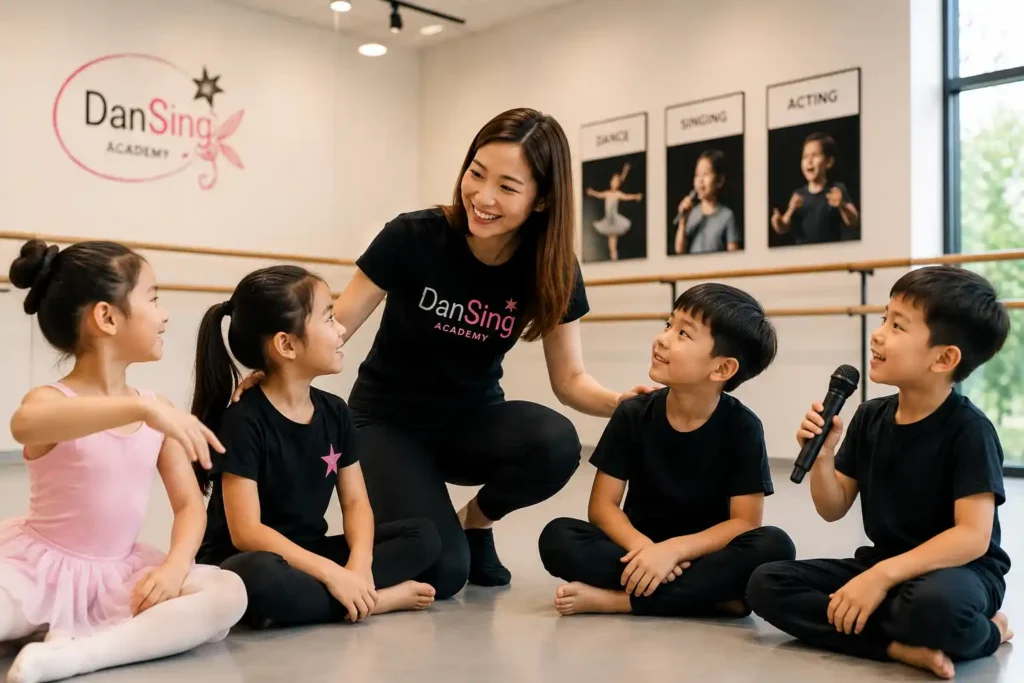
Experienced performing arts teachers understand that every child learns differently. Rather than focusing only on performances, they help students build confidence, improve gradually, and enjoy the learning process.
When researching a performing arts school, ask questions such as:
- What experience do the instructors have?
- Do they work regularly with children?
- How do they encourage shy or beginner students?
- Do they create a supportive learning environment?
A caring and experienced instructor can make all the difference in helping children develop both skills and confidence.
2. Choose Age-Appropriate Classes
One of the most important factors when choosing a performing arts school is ensuring the classes are designed for your child’s age and developmental stage. Children learn differently at different ages, so the curriculum should match their physical, emotional, and social abilities.
For younger children, classes should focus on creativity, movement, imagination, and confidence-building through fun activities. As children grow older, lessons can gradually introduce more structured techniques, performances, and skill development.
If you’re unsure when children should begin their performing arts journey, read our guide on the best age to start performing arts classes to better understand what to expect at each stage of development.
When speaking with a school, ask:
- What age groups do you offer classes for?
- How is the curriculum adapted for different ages?
- Are beginner classes available?
- Can children progress as they grow?
A school that offers structured progression helps children continue developing their skills while keeping learning enjoyable and age appropriate.
3. Explore Different Performing Arts Programs
Every child has unique interests and talents. Some children love to move, while others enjoy singing, storytelling, or acting. A good performing arts school should offer a variety of programs so children can discover what they enjoy most.
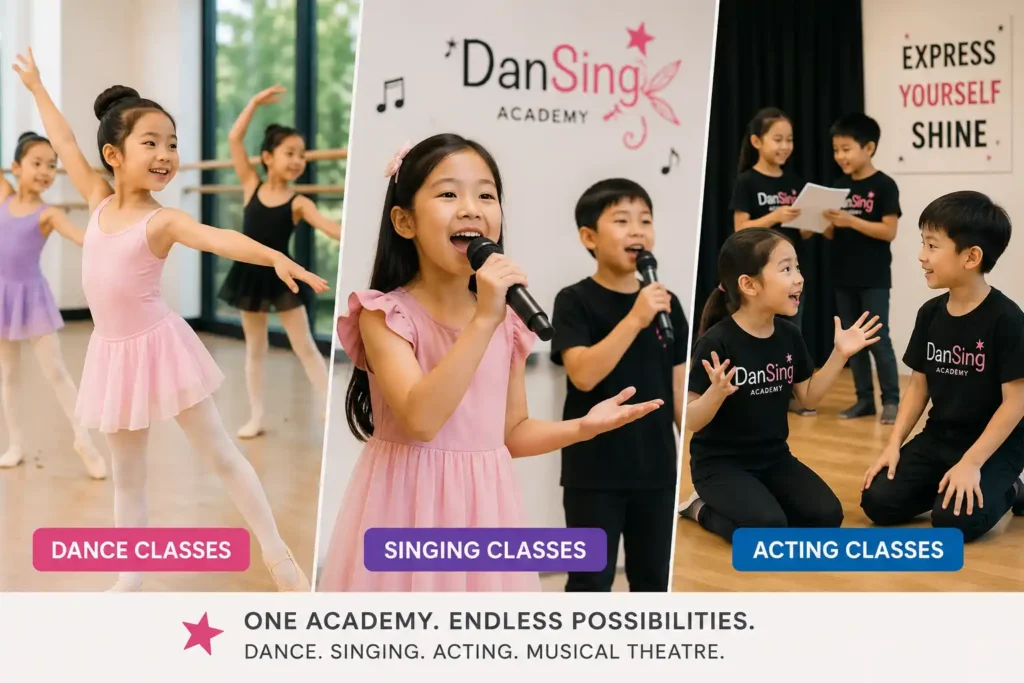
Dance Classes
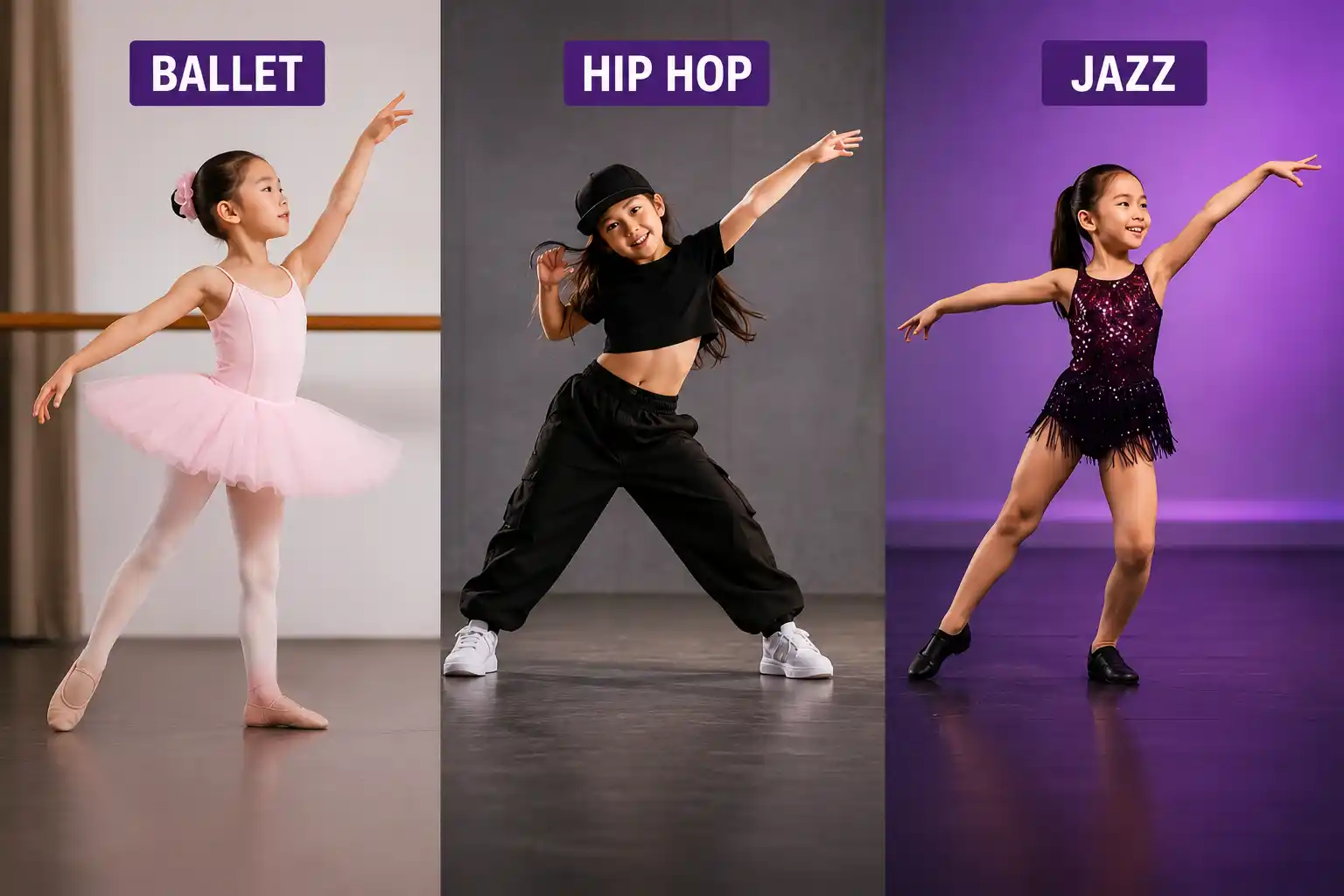
Dance classes help children improve coordination, balance, creativity, confidence, and physical fitness. Through structured movement and choreography, students develop both technical skills and self-expression.
You can learn more about our Dance Classes for Kids and how they support child development.
If you’re interested in the developmental benefits of dance, don’t miss our article on the benefits of dance classes for child development.
Singing Classes
Singing classes help children strengthen vocal technique while improving listening skills, breath control, communication, and stage confidence. Music also encourages creativity and emotional expression.
Explore our Singing Classes for Kids to see how children develop their vocal abilities in a supportive learning environment.
Drama & Acting Classes
Drama and acting classes encourage creativity, imagination, communication, and public speaking skills. Through role play and storytelling, children learn to express themselves with confidence while working collaboratively with others.
Discover how our Drama & Acting Classes for Kids help children build confidence both on and off the stage.
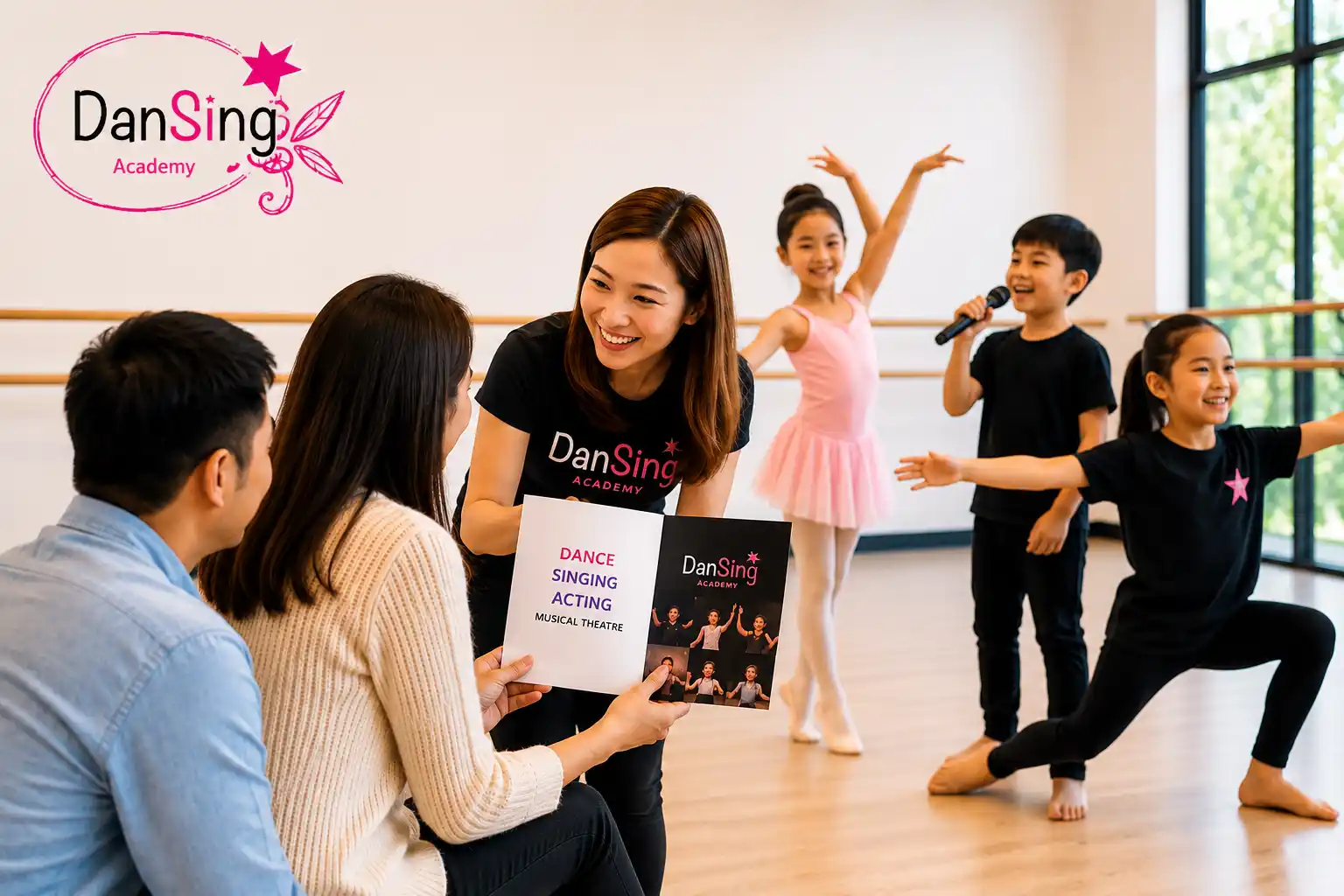
If your child enjoys multiple disciplines, consider a performing arts school that offers dance, singing, and acting under one roof. This allows children to explore different interests before deciding which area they enjoy most.
4. Visit the School Before Enrolling
Photos and websites provide useful information, but nothing compares to visiting a performing arts school in person. A visit allows you to experience the learning environment, meet instructors, and observe how classes are conducted.
During your visit, pay attention to the atmosphere. Do the children look engaged and happy? Are instructors encouraging and approachable? Is the environment clean, safe, and welcoming?
Consider asking the following questions:
- Can parents observe a class?
- How are new students introduced?
- How does the school communicate with parents?
- What opportunities do students have to perform?
Visiting the school can give you confidence that you’re choosing an environment where your child will feel comfortable, supported, and excited to learn.
5. Ask About Performances and Showcases
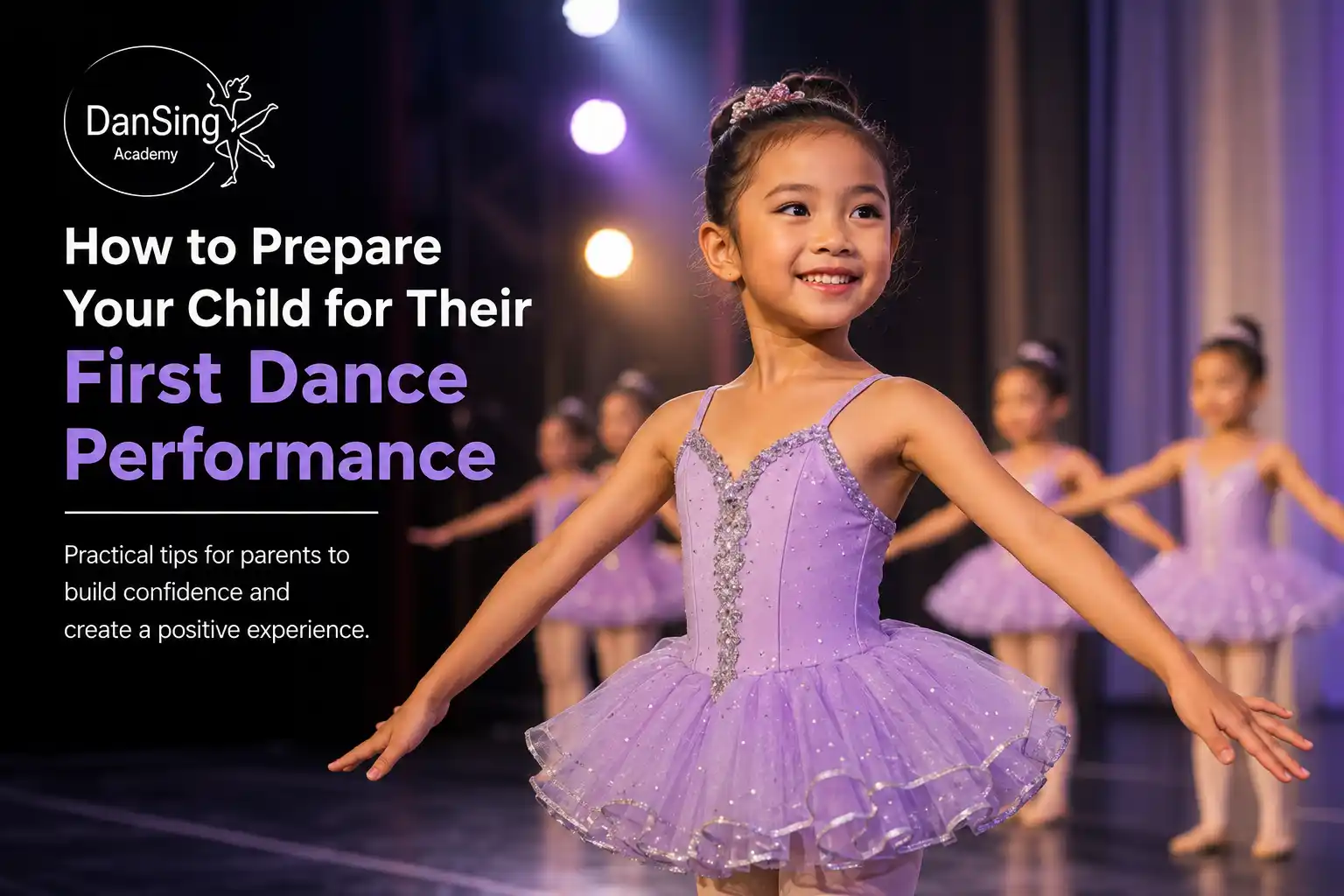
Performances are an exciting part of a child’s performing arts journey. They give students the opportunity to apply what they have learned, celebrate their progress, and build confidence in front of an audience.
While stage performances are valuable, they should never become a source of pressure. A good performing arts school creates positive performance experiences that encourage children to enjoy the stage rather than fear it.
When choosing a school, ask questions such as:
- How often are performances or showcases held?
- Are performances suitable for beginners?
- Does every child have the opportunity to participate?
- How are students prepared before performances?
Regular showcases can help children develop confidence, teamwork, resilience, and a sense of achievement while celebrating their individual progress.
6. Consider Class Sizes and the Learning Environment
The learning environment has a significant impact on your child’s experience. Smaller class sizes often allow instructors to provide more personalised guidance, ensuring each student receives the attention they need.
A welcoming and encouraging environment also helps children feel comfortable trying new activities, making mistakes, and building confidence without fear of judgement.
When visiting a performing arts school, observe whether:
- Classes are well organised.
- Students appear engaged and happy.
- Teachers provide individual encouragement.
- The facilities are clean, safe, and well maintained.
- The atmosphere feels positive and inclusive.
The best learning environments inspire children to enjoy performing arts while developing at their own pace.
7. Read Parent Reviews and Testimonials
Parent reviews can provide valuable insights into a performing arts school’s teaching quality, communication, and overall learning experience.
Look beyond star ratings and read detailed feedback from families. Reviews often reveal how instructors interact with students, how children have progressed over time, and how the school supports parents throughout their child’s learning journey.
While every family’s experience is unique, consistently positive feedback can give you greater confidence when making your decision.
If possible, ask the school if they can share student success stories or testimonials from parents whose children have attended classes for several months or years.
8. Book a Trial Class Before Making a Decision
One of the best ways to determine whether a performing arts school is the right fit is by booking a trial class. A trial allows both you and your child to experience the teaching style, class environment, and overall atmosphere before making a long-term commitment.
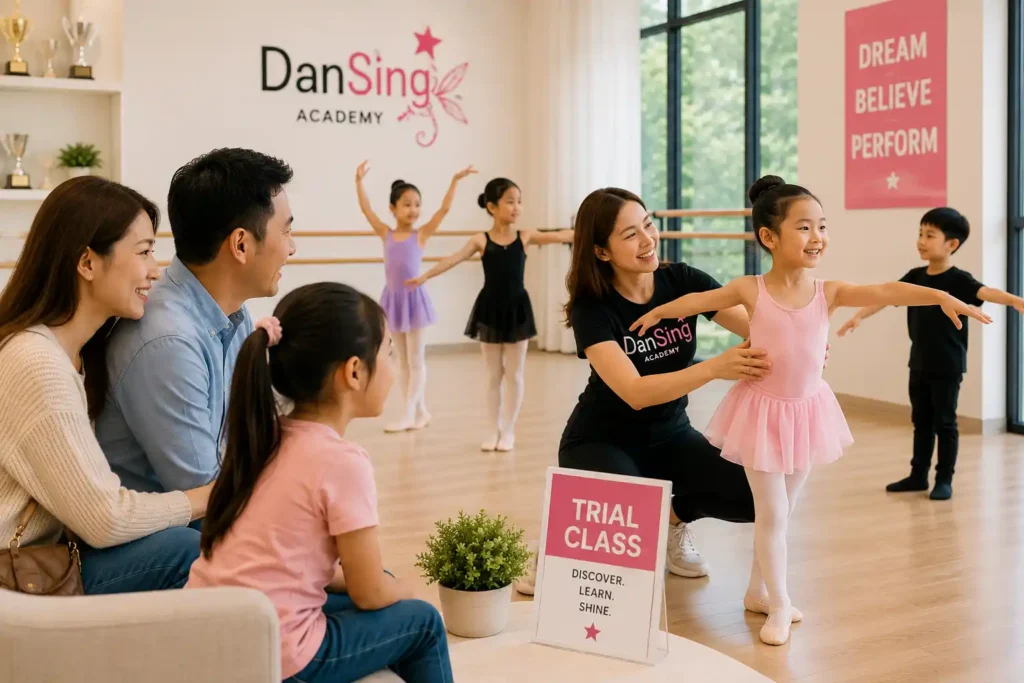
During the trial class, observe whether your child:
- Feels comfortable with the instructor.
- Enjoys participating in activities.
- Interacts positively with other children.
- Shows enthusiasm about returning.
Equally important, consider how the instructors communicate with parents and whether they provide constructive feedback about your child’s experience.
Many parents find that a trial class gives them the confidence they need to choose the right performing arts program for their child.
You can also explore all of our performing arts classes at DanSing Academy to find a programme that matches your child’s interests and goals.
Frequently Asked Questions
Look for experienced instructors, age-appropriate programmes, a supportive learning environment, small class sizes, performance opportunities, and positive parent reviews.
Visiting the school, meeting the instructors, and attending a trial class are the best ways to determine whether the environment suits your child’s personality and learning style.
The best choice depends on your child’s interests. Some children enjoy movement and dance, while others are naturally drawn to music or storytelling. Many schools offer multiple disciplines so children can explore different performing arts.
Trial classes allow children to experience the learning environment before enrolling, helping both parents and students make a confident decision.
Yes. Dance, singing, and acting classes help children gradually build confidence, communication skills, creativity, and social interaction in a supportive environment.
Final Thoughts
Choosing the right performing arts school is about more than selecting a place to learn dance, singing, or acting. It’s about finding a supportive environment where your child can grow in confidence, creativity, communication, and self-expression.
Take the time to visit schools, meet instructors, ask questions, and book a trial class. By choosing a programme that matches your child’s interests and developmental stage, you’ll give them the opportunity to develop valuable life skills while enjoying every step of their performing arts journey.
At DanSing Academy, we believe every child deserves a positive and inspiring introduction to the performing arts. Whether they’re interested in dance, singing, drama, or acting, our experienced instructors are here to help them learn, grow, and shine.