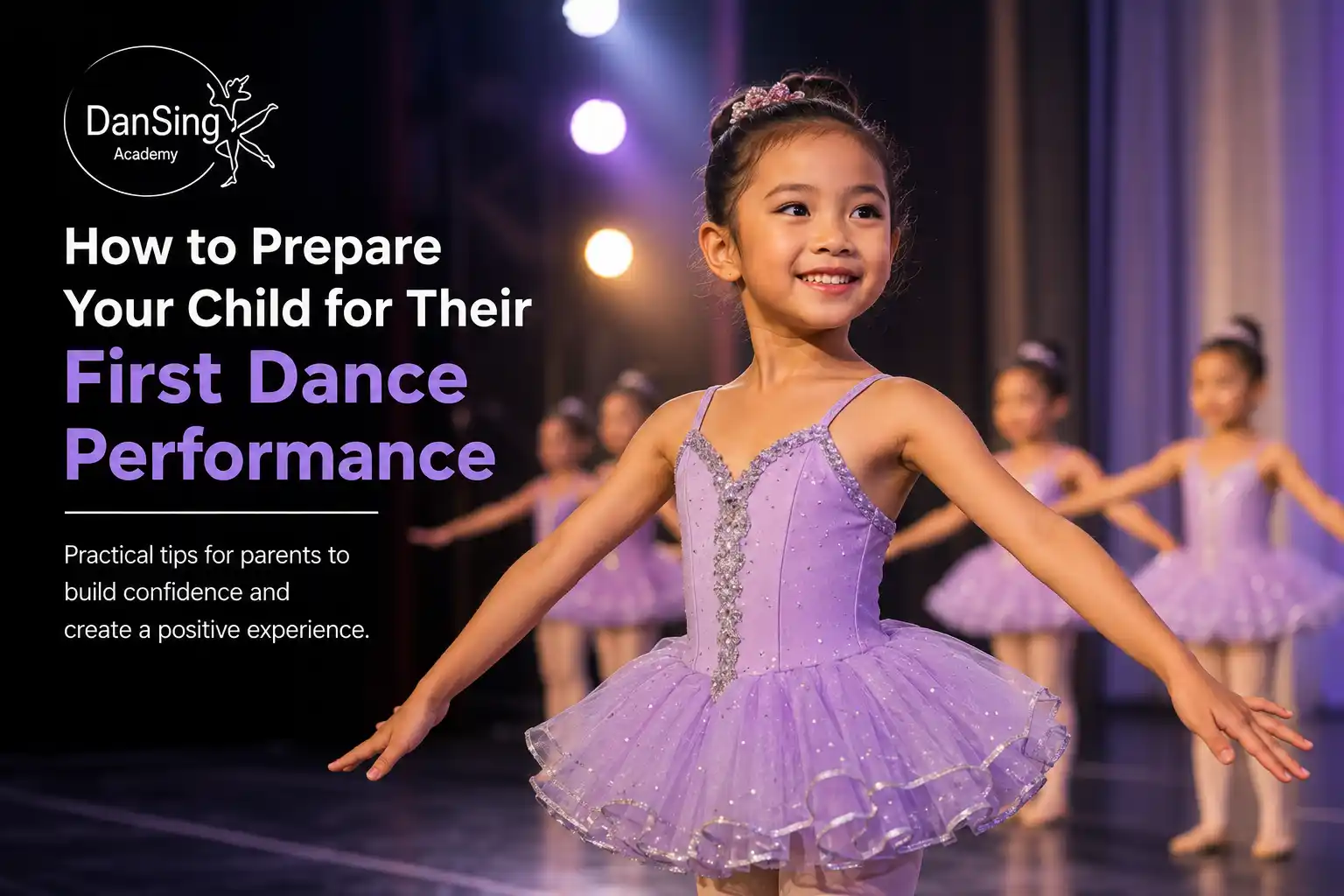
Your child’s first dance performance can be an exciting milestone for the whole family. After weeks of attending classes, learning choreography, and practising movements, they finally have an opportunity to perform in front of an audience.
However, excitement can sometimes come with nerves. Children may worry about forgetting their routine, performing on stage, wearing their costume, or dancing in front of people they don’t know.
For parents, knowing how to prepare a child for a dance performance can make the experience feel more organised and supportive. Simple preparation at home, a calm routine, and positive encouragement can help children approach the day with greater confidence.
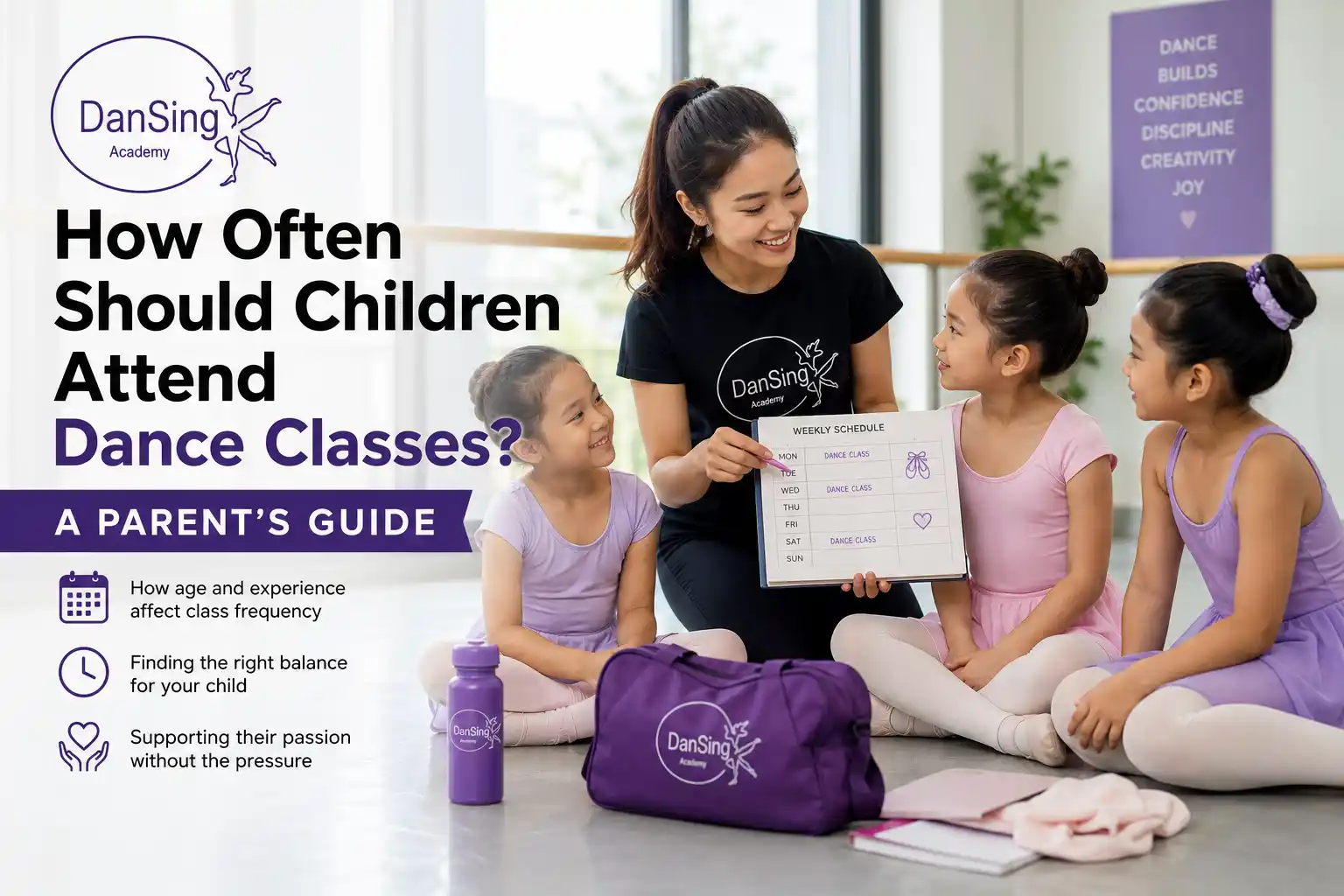
If your child has recently started dance, our guide to how often kids should attend dance classes explains how class frequency, experience, and consistency can influence their dance routine.
In this guide, we’ll share practical dance recital tips for parents, explain what to expect at a first dance recital for kids, and help you prepare your child before, during, and after their performance.
What Should Parents Expect at a Child’s First Dance Performance?
A first dance performance for kids is often very different from a normal weekly dance class. Children may perform in a theatre, studio, school hall, or another performance space with costumes, stage lighting, music, and an audience.
The exact experience will depend on the dance academy and event, but children may need to arrive before the performance for registration, costume preparation, warm-ups, and final rehearsals.
| Performance Stage | What May Happen |
|---|---|
| Arrival | Children check in and meet their teacher or performance group. |
| Preparation | Costumes, hair, and performance items may be checked. |
| Warm-Up | Children prepare their bodies and review basic movements. |
| Final Rehearsal | The group may review choreography or stage positions. |
| Performance | Children perform their dance routine in front of the audience. |
| After the Performance | Children may meet their parents, teachers, and classmates after the event. |
Quick Answer for Parents
Parents can prepare children for their first dance performance by explaining what will happen, following the academy’s instructions, preparing costumes and essential items early, encouraging calm practice, and keeping the experience positive rather than focusing on perfection.
Children who understand what to expect may feel more comfortable with the performance environment. This is why talking about the day beforehand can be an important part of dance performance preparation.
Start Preparing Before Performance Day
Good dance performance preparation doesn’t need to begin the night before the event. Parents can start preparing several days in advance by checking instructions, organising performance items, and helping children understand the schedule.
Last-minute rushing can create unnecessary stress for both parents and children. Preparing early allows the family to focus more on the experience itself.
Performance Preparation Checklist
- Confirm the performance date, time, and location.
- Check the required arrival or call time.
- Read all instructions provided by the dance academy.
- Prepare the costume and dance shoes.
- Confirm hair and appearance requirements.
- Pack any required accessories.
- Plan transport and travel time.
- Explain the performance schedule to your child.
| When to Prepare | What Parents Can Do |
|---|---|
| Several Days Before | Review event information and check the costume. |
| Day Before | Pack essential items and confirm travel plans. |
| Performance Morning | Follow a calm routine and check the performance bag. |
| Before Leaving | Confirm arrival time, location, and essential items. |
If this is your child’s first experience with structured performing arts, you may also find our guide to your child’s first performing arts class useful for understanding how children gradually become comfortable in new learning environments.
How to Practise Without Creating Pressure
Practice can help children feel more familiar with their routine before a kids dance performance. However, repeatedly asking a child to perform the entire routine at home can sometimes make the experience feel stressful rather than enjoyable.
Parents don’t need to become dance instructors at home. The teacher is responsible for technique and choreography. Your role is to create a positive environment where your child feels comfortable reviewing movements they have already learned.
Tips for Positive Dance Practice at Home
- Keep practice sessions short and manageable.
- Allow your child to take breaks when they feel tired.
- Focus on routines already taught during dance classes.
- Avoid comparing your child with other dancers.
- Encourage effort instead of expecting a perfect routine.
- Follow any rehearsal guidance provided by the dance instructor.
| Instead of Saying… | Parents Can Try… |
|---|---|
| “You need to practise again.” | “Would you like to show me part of your dance?” |
| “Don’t forget the steps.” | “Your teacher has helped you prepare for this.” |
| “Everyone will be watching.” | “You get to enjoy performing with your group.” |
| “You have to get it right.” | “Just enjoy the experience and do your best.” |
Positive encouragement can be an important part of dance performance preparation. The goal is to help your child arrive at the event feeling supported rather than worried about making a mistake.
Consistent classes can also help children become more familiar with choreography and group routines. Our guide to how often kids should attend dance classes explores class frequency, home practice, and balanced dance schedules.
How to Help a Nervous Child Before a Dance Performance
It is normal for some children to feel nervous before performing. A child nervous before a dance performance may become quieter than usual, ask repeated questions, worry about forgetting steps, or suddenly say they don’t want to go on stage.
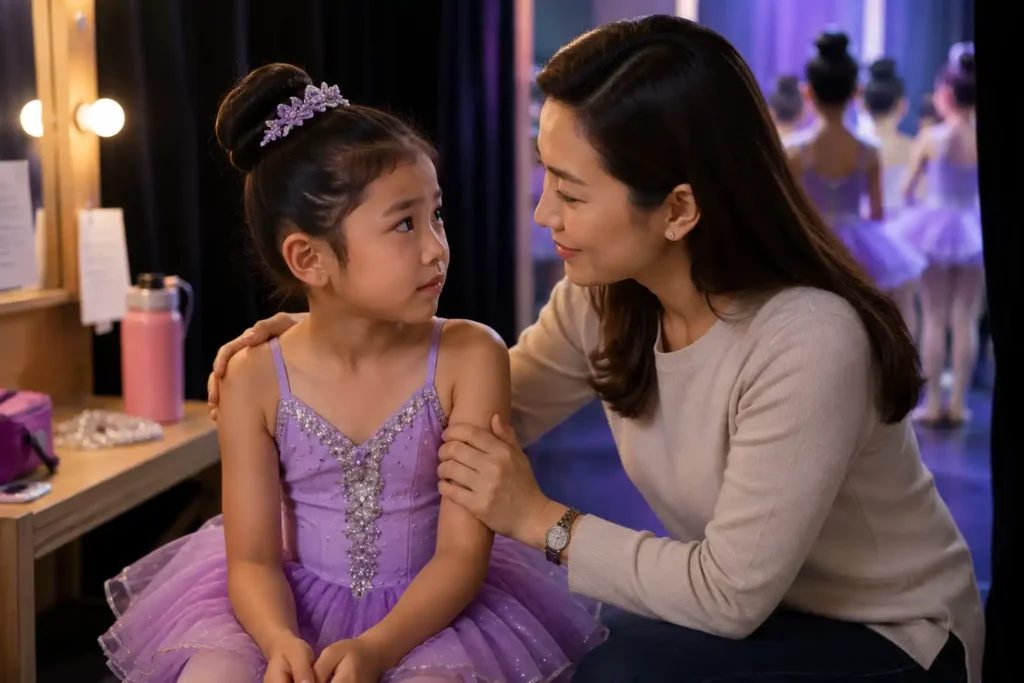
Parents may feel tempted to immediately say, “There’s nothing to worry about.” However, acknowledging your child’s feelings and calmly explaining what will happen can sometimes be more reassuring.
What Can Make Children Nervous?
- Performing in front of an audience.
- Worrying about forgetting choreography.
- Being in an unfamiliar theatre or performance space.
- Wearing a new costume.
- Waiting backstage without their parents.
- Comparing themselves with other dancers.
- Feeling pressure to perform perfectly.
| Child’s Concern | How Parents Can Respond |
|---|---|
| “What if I forget my dance?” | Remind them that they have practised with their teacher and group. |
| “Everyone will look at me.” | Explain that the audience is there to enjoy and support the performers. |
| “I’m scared to go on stage.” | Acknowledge the feeling and remind them they will perform with their classmates. |
| “What if I make a mistake?” | Explain that a small mistake does not define the whole performance. |
Simple Ways to Build Stage Confidence
Building stage confidence for kids usually happens gradually. Children may become more comfortable with performance through regular classes, rehearsals, supportive teachers, and positive stage experiences.
- Talk positively about the performance without creating unrealistic expectations.
- Explain the performance schedule in simple language.
- Encourage your child to ask their teacher questions.
- Keep the morning of the performance calm and organised.
- Remind them that nervous feelings can happen before exciting experiences.
- Focus on participation, effort, and enjoyment.
Performing arts can provide children with regular opportunities to express themselves in front of others. Read our guide to how performing arts builds confidence and public speaking skills in kids to explore how performance experiences may support communication and self-confidence.
What Should Kids Bring to a Dance Performance?
Packing a performance bag in advance is one of the simplest dance recital tips for parents. The exact items will depend on the academy’s instructions, dance style, costume, and venue.
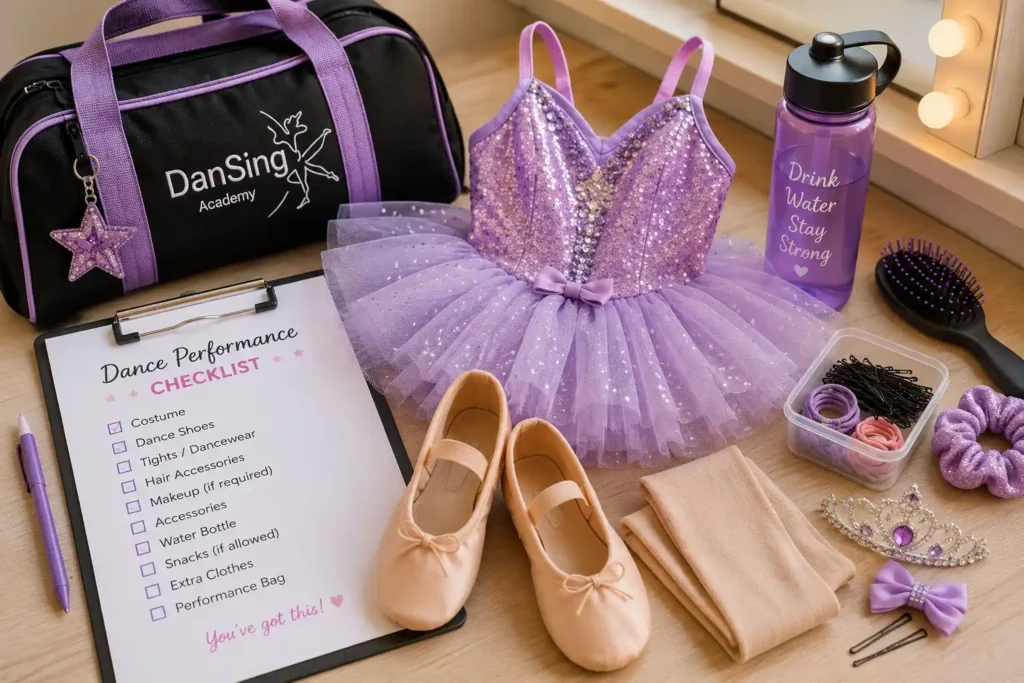
Parents should always follow the official event checklist first. However, the following items may be useful for a first dance recital for kids.
Dance Performance Packing Checklist
- Dance costume.
- Correct dance shoes.
- Required tights or dancewear.
- Hair accessories and supplies.
- Any costume accessories required for the routine.
- Water bottle.
- Light snack, if permitted by the academy.
- Comfortable clothing for before or after the performance.
- A labelled performance bag.
| Item | Why Parents Should Check It |
|---|---|
| Costume | Confirm all costume pieces are packed and ready. |
| Dance Shoes | Check that the correct shoes are packed for the routine. |
| Hair Items | Follow the hairstyle guidance provided by the academy. |
| Water | Helps children have access to a drink when permitted. |
| Labels | Makes personal items easier to identify backstage. |
Pack the bag before performance day whenever possible. A simple checklist can reduce last-minute searching and help the family leave home on time.
What to Do on the Day of Your Child’s Dance Performance
Performance day can feel busy, especially when it is your child’s first dance performance for kids experience. A calm and organised routine can help reduce unnecessary rushing and allow your child to focus on enjoying the event.
Try to follow the schedule and instructions provided by the dance academy. Arrival times are often set early so teachers can organise dancers, check costumes, complete warm-ups, and prepare groups before they go on stage.
Performance Day Checklist for Parents
- Check the performance bag before leaving home.
- Confirm the venue and arrival time.
- Allow extra time for travel and parking.
- Make sure your child has eaten according to their normal routine.
- Follow costume and hair instructions.
- Keep conversations positive and calm.
- Listen to instructions from teachers and event staff.
- Avoid adding last-minute pressure about choreography.
| Performance Day Stage | What Parents Can Focus On |
|---|---|
| At Home | Follow a calm routine and check essential items. |
| Travelling | Allow enough time to reach the venue without rushing. |
| Arrival | Follow registration and teacher instructions. |
| Before the Performance | Offer simple encouragement and allow teachers to prepare the dancers. |
| During the Performance | Enjoy the experience and support the performers. |
How Early Should Children Arrive for a Dance Performance?
Parents should follow the official arrival or call time provided by the dance academy. Some performances require children to arrive well before the audience because dancers may need time for preparation, warm-ups, stage organisation, or final rehearsals.
Arriving late can make dance performance preparation more stressful for your child, their teacher, and the rest of the performance group. Check the event information in advance and plan additional travel time where necessary.
How Should Parents Respond After the Dance Performance?
The moments after a kids dance performance can be important for children. Some will leave the stage feeling excited, while others may immediately focus on a step they forgot or a moment that didn’t go as planned.
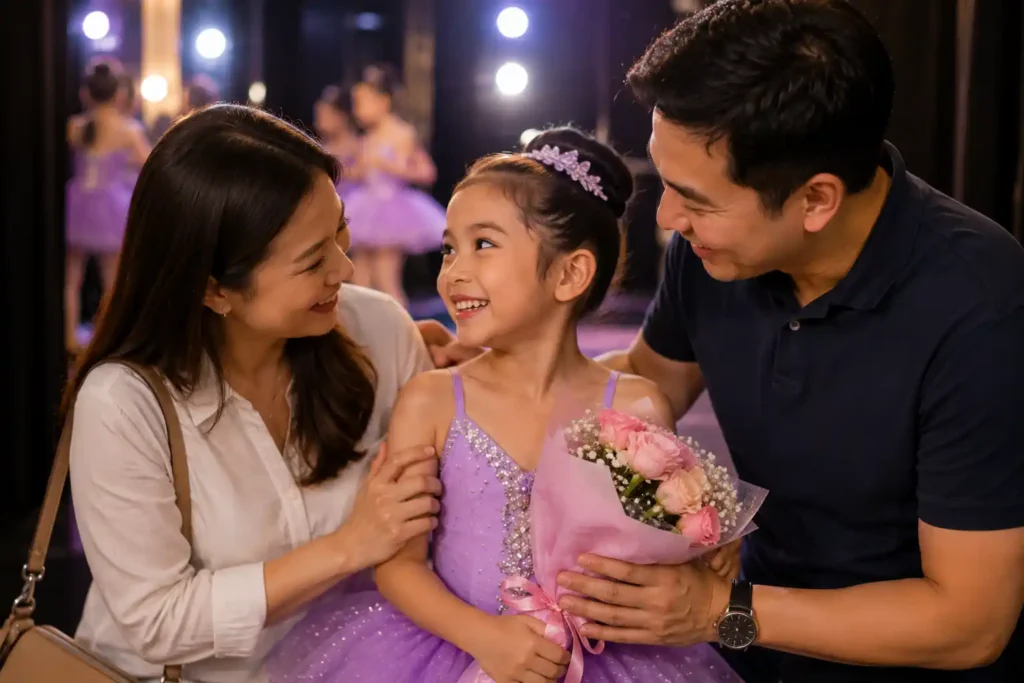
Your first response can help shape how your child remembers the experience. Instead of immediately analysing their technique, focus on their participation, effort, and feelings about performing.
Positive Questions to Ask Your Child
- What was your favourite part of the performance?
- How did you feel when you went on stage?
- Which part of the dance did you enjoy most?
- Did you have fun performing with your group?
- What are you most proud of?
- Would you like to perform again?
| Instead of Focusing On… | Try Focusing On… |
|---|---|
| A forgotten step | The courage to continue performing. |
| Another dancer’s performance | Your child’s individual experience. |
| Perfect technique | Effort, participation, and enjoyment. |
| Immediate improvement | What your child learned from the experience. |
If your child feels disappointed about a mistake, allow them to explain how they feel. A small performance error does not erase the preparation, rehearsals, and confidence required to step onto the stage.
Positive performance experiences can gradually contribute to stage confidence for kids, especially when children feel supported by parents, teachers, and classmates.
Common First Dance Performance Mistakes Parents Can Avoid
Parents naturally want their children to enjoy and succeed during a first dance recital for kids. However, some well-intentioned actions can unintentionally create additional pressure before the performance.
1. Practising Too Much at the Last Minute
Repeatedly reviewing the full routine the night before may leave children feeling tired or worried. Follow the instructor’s rehearsal guidance and allow time for rest.
2. Comparing Your Child With Other Dancers
Children learn and perform differently. Comparing technique, confidence, costumes, or progress can distract from your child’s individual dance journey.
3. Talking Constantly About Mistakes
Repeated reminders such as “don’t forget this step” may increase nerves. Trust the preparation completed during classes and rehearsals.
4. Arriving Late
Late arrival can create unnecessary stress during dance performance preparation. Confirm the call time and plan your journey before the event.
5. Expecting a Perfect Performance
A child’s first performance is a learning experience. Choreography mistakes can happen, especially when children are adjusting to stage lights, audiences, and a new performance environment.
6. Giving Technical Feedback Immediately
Unless you are the dance instructor, performance day may not be the right time for detailed technical corrections. Allow the teacher to guide your child’s dance development.
7. Making the Performance Feel Like a Test
A first dance performance for kids should be an opportunity to experience the stage, perform with classmates, and apply what they have learned. Keeping the event positive can help children feel more comfortable about future performances.
Children can gain confidence, coordination, and social experience through regular dance participation. Our guide to the benefits of dance classes for child development explores these areas in more detail.
How Dance Classes Prepare Children for Performances
Regular dance classes for kids can help children become familiar with learning choreography, following instructions, working with a group, and performing movements to music. These class experiences create a foundation that can support children when they eventually step onto a stage.
Performance preparation usually happens gradually. Teachers may introduce choreography during regular classes before moving into group rehearsals, stage positioning, and final performance preparation.
Skills Children May Use During a Dance Performance
| Dance Class Skill | How It Supports a Performance |
|---|---|
| Choreography | Helps children remember and perform dance routines. |
| Musical Timing | Supports movement with music and rhythm. |
| Group Practice | Helps dancers perform alongside classmates. |
| Listening Skills | Allows children to follow instructions from teachers. |
| Stage Practice | Introduces children to performance positions and movement spaces. |
| Confidence | May help children feel more comfortable participating in front of others. |
Children do not need to become confident performers immediately. For some students, stage confidence for kids develops through repeated opportunities to participate, rehearse, and perform in a supportive environment.
If your child is interested in exploring dance, visit our Dance Classes for Kids page to learn more about dance opportunities at DanSing Academy.
Ready for Your Child’s First Dance Performance?
A first dance performance for kids is an opportunity to celebrate the time, effort, and learning that children have experienced during their dance classes.
Parents can support the experience by preparing early, following academy instructions, keeping home practice positive, and helping children understand what to expect on performance day.
At DanSing Academy, we encourage children to explore performing arts in an environment focused on creativity, confidence, and personal development.
Explore our dance classes for kids and discover opportunities for your child to learn, move, and develop their performance skills.
Frequently Asked Questions
Start dance performance preparation early by reviewing the event schedule, preparing costumes and dance shoes, following rehearsal guidance, and explaining the performance day routine to your child.
Children may need their costume, correct dance shoes, tights or dancewear, hair accessories, water bottle, and any performance accessories required by the academy. Always follow the official event checklist.
If you have a child nervous before a dance performance, acknowledge their feelings, explain what will happen, and focus on participation rather than perfection. Avoid repeatedly reminding them about mistakes or difficult choreography.
Parents should follow the dance instructor’s rehearsal guidance. Light review may be suitable, but excessive last-minute practice can make some children feel tired or pressured.
Small mistakes can happen during a kids dance performance. Encourage your child to continue with the routine and follow their group or teacher’s performance guidance.
Small mistakes can happen during a kids dance performance. Encourage your child to continue with the routine and follow their group or teacher’s performance guidance.
Follow the official arrival or call time provided by the dance academy. Children may need additional time for costumes, warm-ups, group organisation, and final rehearsals.
Stage confidence for kids can develop gradually through supportive classes, rehearsals, positive encouragement, and repeated performance experiences. Parents can help by focusing on effort and participation rather than perfect results.
A first dance recital for kids can introduce children to stage performance, teamwork, choreography, and performing in front of an audience. The experience may also help them understand whether they enjoy future performance opportunities.
Final Thoughts
Your child’s first dance performance for kids experience does not need to be perfect to be meaningful. Forgetting a step, feeling nervous, or needing reassurance can all be part of learning how performances work.
Good dance performance preparation starts with clear information, an organised performance bag, calm encouragement, and realistic expectations. Parents can make the experience more positive by supporting their child without turning the performance into a test.
Most importantly, allow your child to enjoy the moment. A first performance is one step in their dance journey and an opportunity to celebrate their creativity, effort, and courage to step onto the stage.