When your child starts enjoying dance, it’s natural to wonder how often they should attend classes. Is one dance class a week enough? Should they attend twice a week? Or does regular practice at home matter more than adding another lesson?
There isn’t one perfect dance schedule for every child. The right class frequency depends on your child’s age, experience, interest, goals, school commitments, and energy levels.
For beginners, the focus should usually be on building a positive relationship with dance. A schedule that keeps your child interested and excited to return can be more valuable than attending too many classes too quickly.
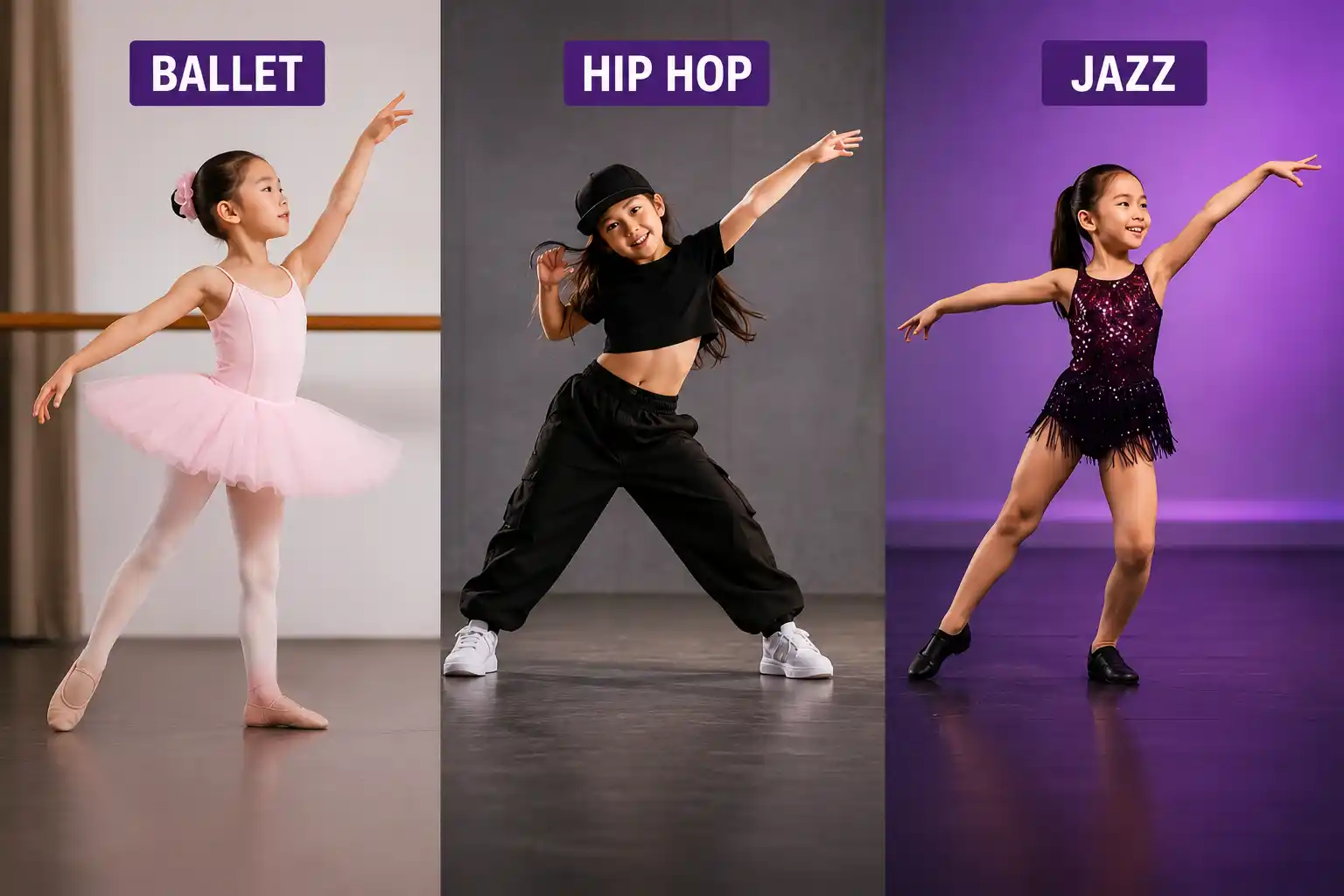
If you’re still deciding which style may suit your child, our guide to ballet vs hip hop vs jazz for kids compares popular dance styles based on movement, energy, and personality.
In this guide, we’ll explore how often kids should attend dance classes, whether one class a week is enough, when additional lessons may be useful, and how parents can create a balanced dance schedule.
How Often Should Kids Attend Dance Classes? Quick Answer
For many beginner children, one dance class per week can be a suitable starting point. Children who become more experienced, show strong interest, or want additional performance training may benefit from attending two or more classes per week.
However, more classes don’t automatically mean better progress. Children also need time for school, rest, family activities, and other interests.
| Child’s Dance Stage | Possible Class Frequency | Main Focus |
|---|---|---|
| New Beginner | 1 class per week | Enjoyment, basic movement, and confidence |
| Interested Beginner | 1–2 classes per week | Coordination, technique, and regular learning |
| Developing Dancer | 2 or more classes per week | Technique, choreography, and performance skills |
| Performance-Focused Child | Depends on programme and goals | Rehearsals, technique, and performance preparation |
These are general examples rather than strict rules. The most suitable dance schedule should reflect your child’s individual needs and the structure of their dance programme.
What Should Parents Consider?
- Your child’s age and stage of development.
- Their current dance experience.
- How much they enjoy attending classes.
- The type of dance style they are learning.
- School and homework commitments.
- Other sports or extracurricular activities.
- Whether they are preparing for a performance.
- The recommendations of their dance instructor.
Regular attendance is important, but the goal should be consistency rather than simply increasing the number of weekly classes.
How Age Can Affect Dance Class Frequency
A child’s age can influence how much structured dance training feels comfortable and manageable. Younger children may benefit from shorter, enjoyable classes, while older children may be ready for more regular training and detailed choreography.
| Age Stage | General Dance Approach | Scheduling Consideration |
|---|---|---|
| Preschool Children | Creative movement, rhythm, and basic coordination | Focus on enjoyment and manageable class routines. |
| Early Primary Children | Basic technique, choreography, and teamwork | Consistent weekly classes may help establish a learning routine. |
| Older Children | Technique, performance, and more detailed routines | Additional classes may be considered based on interest and goals. |
Parents should also pay attention to how their child responds after class. Feeling pleasantly tired after physical activity can be normal, but regularly appearing exhausted, stressed, or reluctant to attend may suggest the schedule needs reviewing.
Not sure whether your child is at the right age to begin? Read our guide to the best age to start performing arts classes for a broader look at age, readiness, and child development.
Is One Dance Class a Week Enough?
For many children, especially beginners, one dance class per week can be enough to start learning basic movements, improve coordination, and become comfortable in a dance environment.
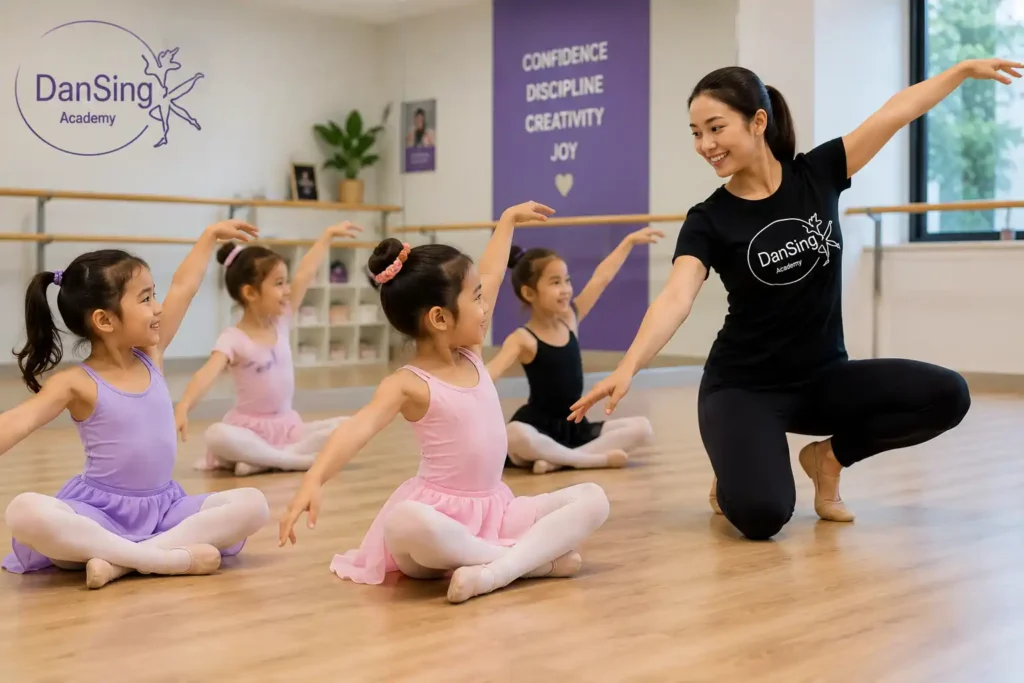
A consistent weekly class gives children time to learn new skills without making their schedule feel overwhelming. It can also help parents understand whether their child genuinely enjoys dance before adding more lessons.
One Weekly Dance Class May Be Suitable If Your Child:
- Is completely new to dance.
- Is still exploring different activities.
- Has school or other extracurricular commitments.
- Wants to dance mainly for enjoyment and confidence.
- Needs time to become comfortable in a new class.
- Is learning basic movements and beginner choreography.
| Benefit of One Weekly Class | Why It May Help Beginners |
|---|---|
| Consistent Routine | Helps children become familiar with regular dance lessons. |
| Manageable Schedule | Leaves time for school, family, and other activities. |
| Gradual Learning | Allows children to develop basic skills at a comfortable pace. |
| Less Pressure | Keeps the early dance experience positive and enjoyable. |
| Time to Explore | Helps children decide whether they want to continue dancing. |
The quality and consistency of the class matter more than simply adding extra lessons. Regular attendance and active participation can help children build a stronger learning routine over time.
Dance can also support confidence, coordination, social interaction, and physical activity. You can explore these areas in our guide to the benefits of dance classes for child development.
When Should Children Attend Dance Classes Twice a Week?
As children become more interested in dance, parents may consider increasing their classes from once to twice a week. This can provide more opportunities to practise technique, learn choreography, and become comfortable with different movements.
However, the decision should be based on your child’s interest and goals rather than pressure to progress faster.
Signs Your Child May Be Ready for Two Dance Classes a Week
- They regularly look forward to dance class.
- They practise dance movements at home without being asked.
- They ask to attend more classes.
- They show interest in learning another dance style.
- They are preparing for performances or rehearsals.
- Their instructor recommends additional training.
- Their school and personal schedule can comfortably manage another class.
| Reason for Adding a Second Class | Possible Benefit |
|---|---|
| Strong Interest in Dance | Provides more opportunities to enjoy and explore dance. |
| Technique Development | Creates additional structured learning time. |
| Learning Another Style | Introduces different movement and performance skills. |
| Performance Preparation | Provides more rehearsal and choreography practice. |
| Teacher Recommendation | Supports learning based on the instructor’s observation. |
For example, a child may attend ballet once a week and later add jazz or hip hop to explore a different movement style. If you’re considering different options, read our ballet vs hip hop vs jazz guide for kids.
Does Your Child’s Dance Experience Matter?
Experience is another important factor when deciding how often a child should attend dance classes. A beginner and a child who has been dancing for several years may have very different learning needs.
New dancers often need time to understand basic class routines, movement patterns, and instructions. More experienced dancers may be comfortable with additional classes, longer choreography, or performance preparation.
| Experience Level | Learning Priority | Class Frequency Consideration |
|---|---|---|
| Complete Beginner | Enjoyment and basic movement | Start with a manageable weekly routine. |
| Developing Beginner | Coordination and basic technique | Consider additional classes if interest remains strong. |
| Experienced Dancer | Technique and choreography | More regular training may suit individual goals. |
| Performance-Focused Dancer | Rehearsal and stage preparation | Frequency may increase around performances. |
Parents should avoid comparing their child’s dance schedule with another student’s. Progress can look different for every child, and the most appropriate class frequency depends on individual interest, development, and goals.
Dance Classes vs Practice at Home: What Matters More?
Regular dance classes and practice at home can both support a child’s learning, but they serve different purposes. Classes provide structured instruction, teacher feedback, and opportunities to learn alongside other children.
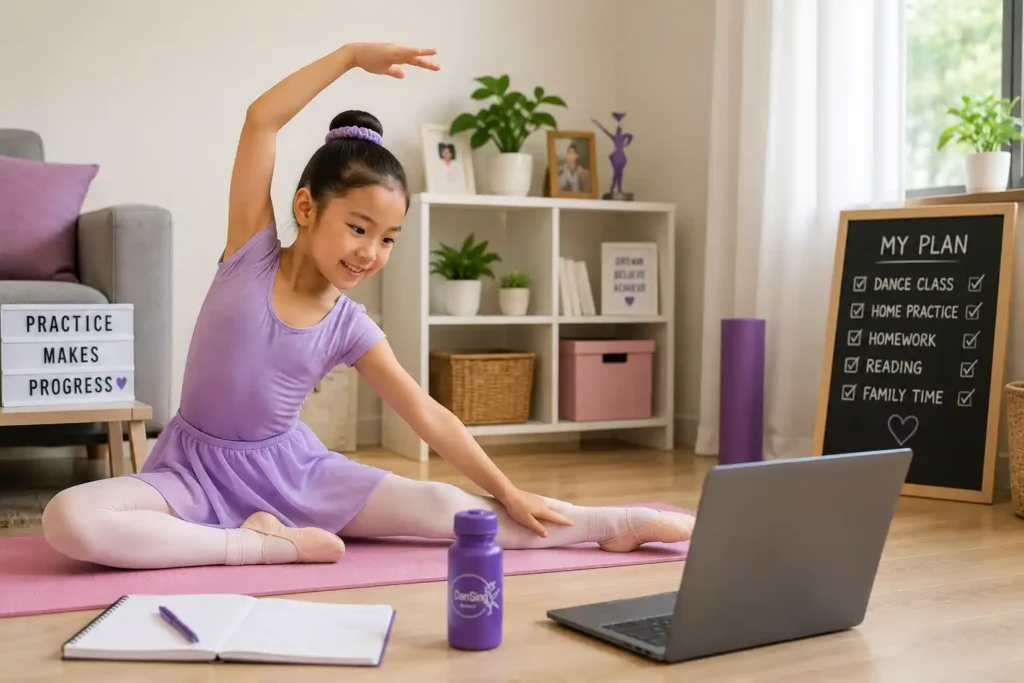
Home practice gives children additional time to remember movements, repeat choreography, and explore dance at their own pace. However, home practice shouldn’t replace professional instruction, especially when children are learning new techniques.
| Dance Classes | Practice at Home |
|---|---|
| Structured instruction from a teacher | Opportunity to repeat familiar movements |
| Feedback on technique and movement | Helps children remember choreography |
| Group activities and teamwork | Allows children to practise at their own pace |
| Age-appropriate learning activities | Encourages independent learning |
| Safe introduction to new skills | Provides additional repetition between classes |
How Often Should Kids Practise Dance at Home?
There is no strict home practice schedule that works for every child. For young beginners, short and enjoyable practice sessions may be more manageable than long or highly structured training.
- Keep practice short and age-appropriate.
- Focus on movements already introduced in class.
- Allow children to practise when they feel interested.
- Create a safe space with enough room to move.
- Avoid turning home practice into pressure or punishment.
- Follow any practice guidance provided by the dance instructor.
The aim is to support what children learn during class while keeping dance enjoyable. If your child regularly dances at home without being asked, this may also be a sign of genuine interest in the activity.
Signs Your Child’s Dance Schedule May Be Too Busy
Dance can be an enjoyable part of a child’s weekly routine, but more classes are not always better. Children also need time for school, family, rest, friendships, and unstructured play.
Parents should pay attention to changes in their child’s energy, mood, and enthusiasm. A schedule that once worked well may need adjusting as school commitments or other activities change.
Signs It May Be Time to Review the Schedule
- Your child regularly says they are too tired to attend class.
- They have lost interest in activities they previously enjoyed.
- Homework or school responsibilities are becoming difficult to manage.
- They frequently feel rushed between activities.
- They no longer look forward to dance class.
- They have limited time for rest or family activities.
- Dance feels like an obligation rather than an enjoyable activity.
| What You Notice | What Parents Can Consider |
|---|---|
| Regular tiredness | Review the number of weekly activities. |
| Loss of enthusiasm | Ask your child how they currently feel about dance. |
| School pressure | Consider whether the schedule needs temporary adjustment. |
| Too many activities | Prioritise the activities your child genuinely enjoys. |
| Performance pressure | Speak with the instructor about expectations and goals. |
A busy week doesn’t automatically mean your child should stop dancing. Sometimes a small schedule adjustment can create a healthier balance and help them rediscover their enthusiasm.
How to Balance Dance With School and Other Activities
School, homework, family time, and extracurricular activities all compete for space in a child’s weekly schedule. The right balance will look different for every family.
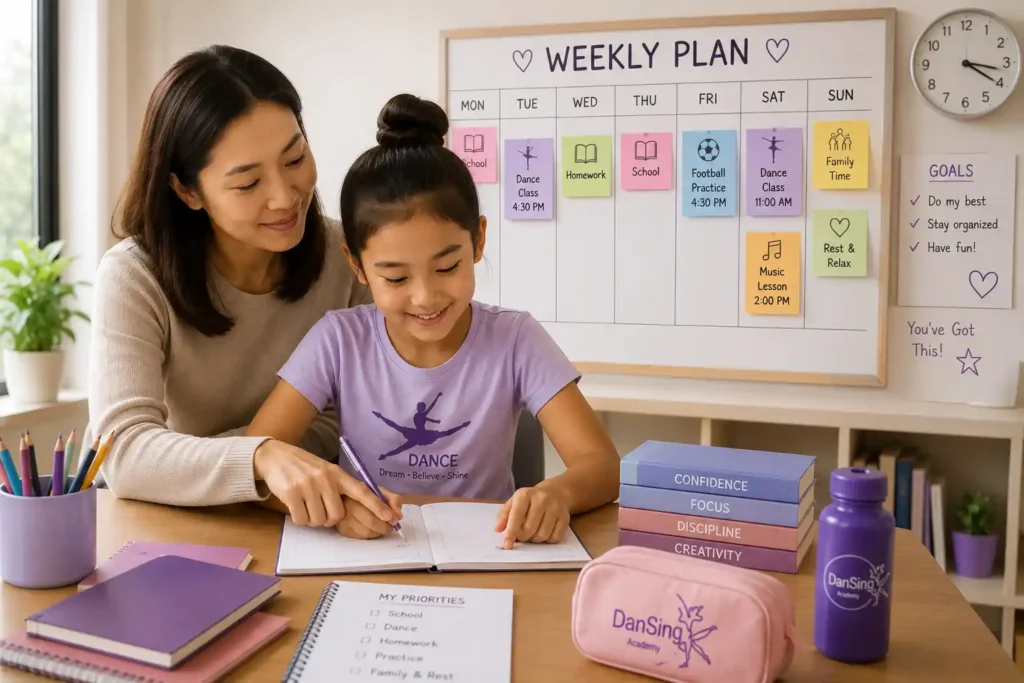
Instead of filling every available afternoon with activities, parents can create a weekly routine that includes structured classes as well as time to rest and recharge.
Tips for Creating a Balanced Weekly Schedule
- Review your child’s complete weekly schedule before adding another class.
- Avoid scheduling several demanding activities on the same day.
- Keep regular time available for homework and school projects.
- Protect some evenings or weekends for family and rest.
- Ask your child which activities they genuinely enjoy.
- Review the schedule when school commitments change.
- Communicate with instructors during busy or demanding periods.
| Question for Parents | Why It Matters |
|---|---|
| Does my child still enjoy dance? | Interest can support consistent participation. |
| Are they getting enough rest? | Children need recovery time between activities. |
| Is schoolwork manageable? | Extracurricular activities should fit around important responsibilities. |
| Do they have free time? | Unstructured time is also an important part of childhood. |
| Are they asking for more classes? | Genuine interest may help guide future scheduling decisions. |
A balanced schedule can help children continue enjoying dance without feeling overwhelmed. The goal is to create a routine that supports consistent learning while respecting your child’s wider needs and commitments.
Performing arts can also support confidence and communication when children learn in a positive environment. Read our guide on how performing arts builds confidence and public speaking skills in kids to explore these wider developmental benefits.
How to Choose the Right Dance Schedule for Your Child
Choosing the right dance schedule is less about finding a perfect number of weekly classes and more about understanding your child’s individual needs. Age, experience, enthusiasm, goals, and other commitments should all be considered before deciding how often they attend.
For many beginners, starting with one consistent weekly class can provide a manageable introduction to dance. If your child’s interest grows and they want additional learning opportunities, parents can gradually explore more classes.
Quick Dance Schedule Checklist for Parents
- Does my child genuinely enjoy attending dance classes?
- Do they look forward to their next lesson?
- Is their current schedule manageable alongside school?
- Do they have enough time for rest and family activities?
- Are they interested in learning another dance style?
- Are they preparing for a performance or special event?
- Has their dance instructor recommended additional training?
| If Your Child… | Parents May Consider… |
|---|---|
| Is completely new to dance | Starting with one consistent weekly class. |
| Shows growing interest | Discussing additional learning opportunities with their instructor. |
| Wants to explore another style | Trying ballet, hip hop, jazz, or another suitable dance programme. |
| Is preparing for a performance | Following the rehearsal schedule recommended by the academy. |
| Feels tired or overwhelmed | Reviewing and adjusting their weekly activity schedule. |
Parents don’t need to make this decision alone. An experienced dance instructor can observe how a child participates in class and provide guidance based on their current learning stage.
If you’re still comparing programmes and teaching environments, read our guide to choosing a performing arts school in Singapore before making your decision.
Ready to Find the Right Dance Class for Your Child?
A positive dance experience begins with a schedule that supports your child’s interests without overwhelming them. Whether they attend once a week or gradually explore additional classes, consistency and enjoyment should remain at the centre of their dance journey.
At DanSing Academy, children can explore dance in a supportive performing arts environment designed to encourage confidence, creativity, movement, and personal development.
Explore our Dance Classes for Kids to discover suitable dance opportunities for your child’s interests and learning journey.
Frequently Asked Questions
For many beginners, one dance class per week can be a suitable starting point. Children with more experience, strong interest, or specific performance goals may attend additional classes depending on their programme and schedule.
Yes. One consistent weekly class can help beginner children become familiar with dance, learn basic movements, and develop a regular learning routine.
Two weekly classes may suit children who show strong interest, want to explore another dance style, or need additional rehearsal time. Parents should also consider school and other commitments.
There is no fixed schedule for every beginner. Short, enjoyable practice sessions based on movements already introduced in class may help children remember choreography without creating unnecessary pressure.
A busy activity schedule can become difficult for some children. Regular tiredness, loss of enthusiasm, and difficulty managing school responsibilities may be signs that parents should review the weekly schedule.
Not necessarily. Progress depends on several factors, including consistent attendance, age-appropriate instruction, participation, practice, and individual development. More classes do not automatically guarantee faster progress.
Children can explore multiple dance styles if they are interested and their schedule is manageable. Our ballet vs hip hop vs jazz comparison can help parents understand how popular dance styles differ.
Final Thoughts
So, how often should kids attend dance classes? For many beginners, one class per week can provide a comfortable and consistent starting point. As children gain experience and develop a stronger interest in dance, additional classes may become suitable.
The right dance schedule should consider your child’s age, enthusiasm, experience, school commitments, energy levels, and personal goals. Rather than comparing their schedule with other dancers, focus on whether your child is enjoying the experience and continuing to learn.
A balanced approach can help children develop dance skills while maintaining a healthy relationship with performing arts. By listening to your child and communicating with their instructor, you can create a dance schedule that supports both learning and enjoyment.